BLK SCL! Speaks with… KOJ
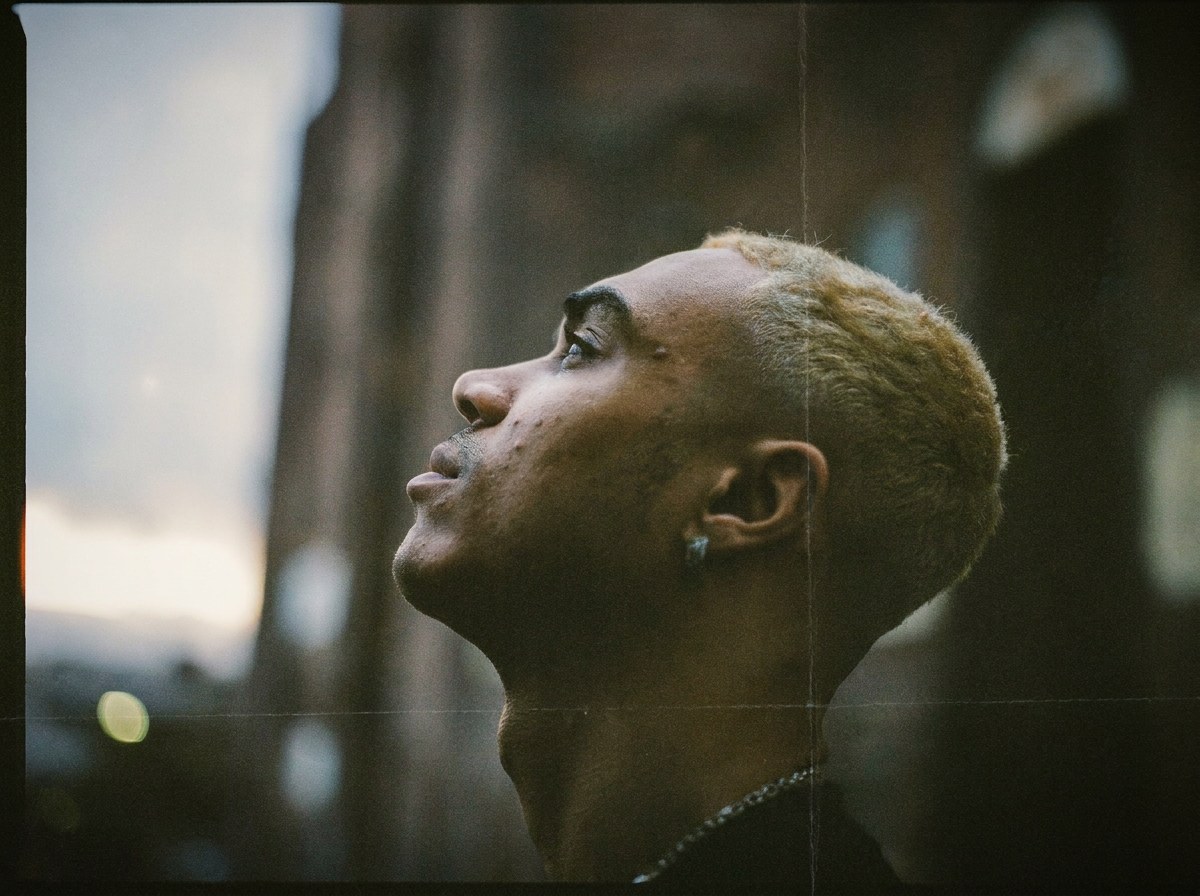
If you're enjoying it, you're enjoying honing your craft and it's giving back to you — that's enough for me.
KOJ is a Liverpool-born artist who has built a reputation as one of the most creatively restless voices coming out of the North. Starting out in grime and 140 — earning respect for his lyricism and edge — he's since pushed into darker, punk-influenced territory without losing any of the conviction that made people pay attention in the first place.
His project Villain With a Conscience marked a turning point — vulnerable, slower, more exposed. Now, with Punk Panther, he's shifted again: louder, more confrontational, and clearly energised by the change. It's the sound of an artist who's stopped performing for approval and started making music purely on his own terms.
Rooted in Liverpool but speaking to a generation nationwide, KOJ is as sharp on the state of the industry as he is in the booth — and he's got a lot to say. We caught up with our first BLK SCL! Sound signee to talk that talk.
BS!: Your sound has developed quite a lot recently, especially since your last project. What has been the reasoning behind that shift, and where do you feel like you're at creatively now?
KOJ: I think it's an artist's duty to evolve and grow and explore themselves and their sound. All the great musicians that I think of have done it in various ways. Bowie used to do it, Skepta's done it. All great artists have to do it and have to reinvent themselves.
For me, I think exploring sonically as a human being has led me to a place where I've just fallen back in love with the process of making music, through putting in influences that are outside of the box for me, and maybe outside of what people view Black music and Black British music as. So that's quite exciting for me, and fun.
BS!: Was changing your direction scary, especially when people already knew you for a certain sound? You were spitting and doing the 140 stuff, whereas now you're moving into a more punk-based sound. Were you worried about how that shift would be perceived?
KOJ: Not necessarily, to be honest. It was scarier transitioning into the Villain With a Conscience stuff… being so vulnerable and slowing down the pace was scarier, really. Whereas this stuff is super exciting. It's thrilling, this change for me. People will always have their criticisms and their comments or whatever, but I think the real power and the real magic is if you're enjoying it. If you're enjoying yourself, you're enjoying honing your craft and it's giving back to you because you put so much in, that's enough for me in many ways.
BS!: What do you think are the biggest challenges artists are facing right now when it comes to making music for a living?
KOJ: I don't think there's one singular challenge. I think it's a combination of things. Obviously, financially it's quite tough to be an artist. The barrier to entry has changed in a way where anyone can put their records out, but where do you get your instrumentals from? If you're producing, what software are you using and how much is that costing? How much are your plugins, your studio time, then your mix and master? Then there's social media and boosting posts and all these different things.
Because of that, I think artists almost have to be more willing to compromise themselves and their sound to generate hype, income, likes and views. You have to meet criteria that are so man-made. It's almost like it's AI-generated, you have to have so many views and so many followers. But what's the music saying, though?
I think now more than ever, if you're willing to make a joke out of yourself, you'll be rewarded. But if you take yourself and others seriously and you want to be taken seriously, it's not a great time for you. In short, I think artists are almost pushed into making shit that they don't really believe in, and then the art form suffers. It becomes: what are you willing to tolerate before you can be yourself properly?
BS!: Do you think artists are under more pressure now to be everything at once? You're not just a musician anymore, you're a content creator, a brand and everything else. Do you think there's more pressure compared to back in the day?
KOJ: Yeah, I just feel like it's become too warped.
Back in the day, labels were milking artists, let's say, but at least you were granted the space to create your best work and then you were helped to package it. Whether it was your vision or the label's vision or whatever it was, your manager managed things and your producer produced things. Your stylist dressed you, the videographer did their thing, and you made sure there was intent and integrity in the product itself, which was the music. The rest was shaped by helping hands.
I'm not saying people need all of those things, but obviously a lot of people benefit from a team around them. I have a team and my team are very helpful. We have different strengths.
But to be the producer, the director, sometimes the editor of your content, the social media manager, the stylist, the personality, the negotiator, that's a lot of skills.
For somebody who just excels in making music, riffs, melodies, lyrics and songwriting, to then have to negotiate as well is a tough ask sometimes.
Think about how vulnerable women are in this space already. You could take a young girl who's 22 and whose songwriting capabilities are beyond her peer group. She could be writing something that can fucking change the world, but now she's also got to negotiate. She's her manager, creator and everything else. That's how people end up getting fucked over, because she might not have the tools, resources or knowledge to cut herself a decent deal. By the time she realises it, it's often too late.
So I think it's very difficult. It's almost too big of an ask. I don't like to shy away from any challenge, but it's a lot when you start filtering in people's lives as well. Someone's lost someone, someone's partner has just left them, there are a lot of things happening. It's intense.
BS!: Being an artist from Liverpool and the North, do you feel like where you're from has affected the opportunities available to you, whether positively, negatively or a bit of both?
KOJ: In short, yeah.
It's weird. Years ago, no one really cared about what was happening in Liverpool. Then you get a few Scousers, a few films and a few TV shows, and it becomes a bit of a commodity.
Unfortunately, what happens then is people start playing into the hype. It's a Southerner's view of a Scouser rather than what a Scouser truly is, because that's what gets attention.
So now I'm probably exposed to more opportunities, but probably fewer opportunities that are actually for me, on brand for me or speak to the true shaping of Northern British culture.
At the end of the day, it's not just 110s and bikes and shit. If you're not really willing to play that role, there isn't really another Scouse role within the opportunities in the industry.
So it's positive and negative, in my opinion. And I think it's situational. For some people it'll be purely positive, and for some people it'll be purely negative, because a Scouser isn't just one thing.
BS!: What do you think needs to change in the industry to make having a sustainable career more realistic for independent and emerging artists?
KOJ: I think the music industry should let TikTok be TikTok.
Just because something has trended for the moment, rather than trying to invest in virality in the hope that an artist just magically pops out of it, let TikTok and Instagram virality be that — like Vine was. Let them populate that space, and if true artists emerge, you can invest in true artists.
But trying to make TikTok sensations into artists, I just don't think it's beneficial for anyone. You know how it goes: they invest millions into this guy who went viral overnight, but then there's no artist in there. Now they're at a loss of millions, so then they can't invest in true potential. There's no money left, basically.
Let TikTok be TikTok and reward artistry.
Some people will say that we make the algorithm, we choose what becomes viral through interacting with it and sharing it or whatever, but I think that underestimates the influence of media. If you push artistry, help package it and help place it, then it will flourish. Whether you're an independent artist, an emerging artist or you want a career and you're with a label, it's all situational. It all depends on your negotiations anyway.
Rather than demonising labels, labels fucking up investments and all this shit, just reward intentional artistry and good-quality music. It's pretty simple, really. It's not actually this crazy formula that needs to happen.
BS!: Finally, do you have any advice for artists who might be feeling overwhelmed by all of these pressures?
KOJ: At some point, you have to put your hands up in acceptance and strip it back to your process. I think that's where the magic is.
It's good to learn new skills and implement new things, but the idea of, "If I don't jump on this new thing, I'll be lost with the times", forget about it. I don't think that's the magic of music anyway.
I don't think music has ever been a race in that way. I think you find moments of magic through experiencing things, then reflecting, repurposing and narrating. That's the magic. Even through production, that's the magic. When producers make sounds, it's an interpretation of feelings and experiences and all these things.
So I think it's about stripping it back to your authentic process, whatever that is, and accepting that it might not be the 'in' thing. It might not be the hype thing. It might not generate the most fucking likes. But I don't think that's real. I think what's real is the music and the art.
I know I'm harping on about art, art, art, but at the minute it's consuming me all over again. I got very tired of listening to music all night and being around people asking, "What have you got coming up?" I got so tired of it until I started listening to amazing music again: Yussef Dayes, fucking James Brown and shit, proper root shit, and then I was like, "Oh, holy shit." Actually, keeping up to date was killing me.
It's good when you're enjoying it. If you're in a phase of finding new shit, finding amazing things and networking, and you're enjoying it, I think that's great. That is magic when it's magic.
But when you get irritable, fatigued and frustrated, and envy and comparison start creeping in, you have to take a step back and ask yourself: "Why did I start doing this? What kicks me off?"
For more on KOJ: @punkpantherkoj
BLK SCL! is building a living map of Black music culture across the North of England, Wales, Scotland and Northern Ireland — the scenes creating world-class work even without the resources they deserve.
If you're a Black music artist, organiser, tastemaker or community builder based in the North of England, Wales, Scotland or Northern Ireland (or you know someone we should be speaking to), let us know.